🌀 Worst Dates, NATO Simulations, And Imagining Better Futures.
The future doesn’t exist, and that’s actually good news.

Happy Friday!
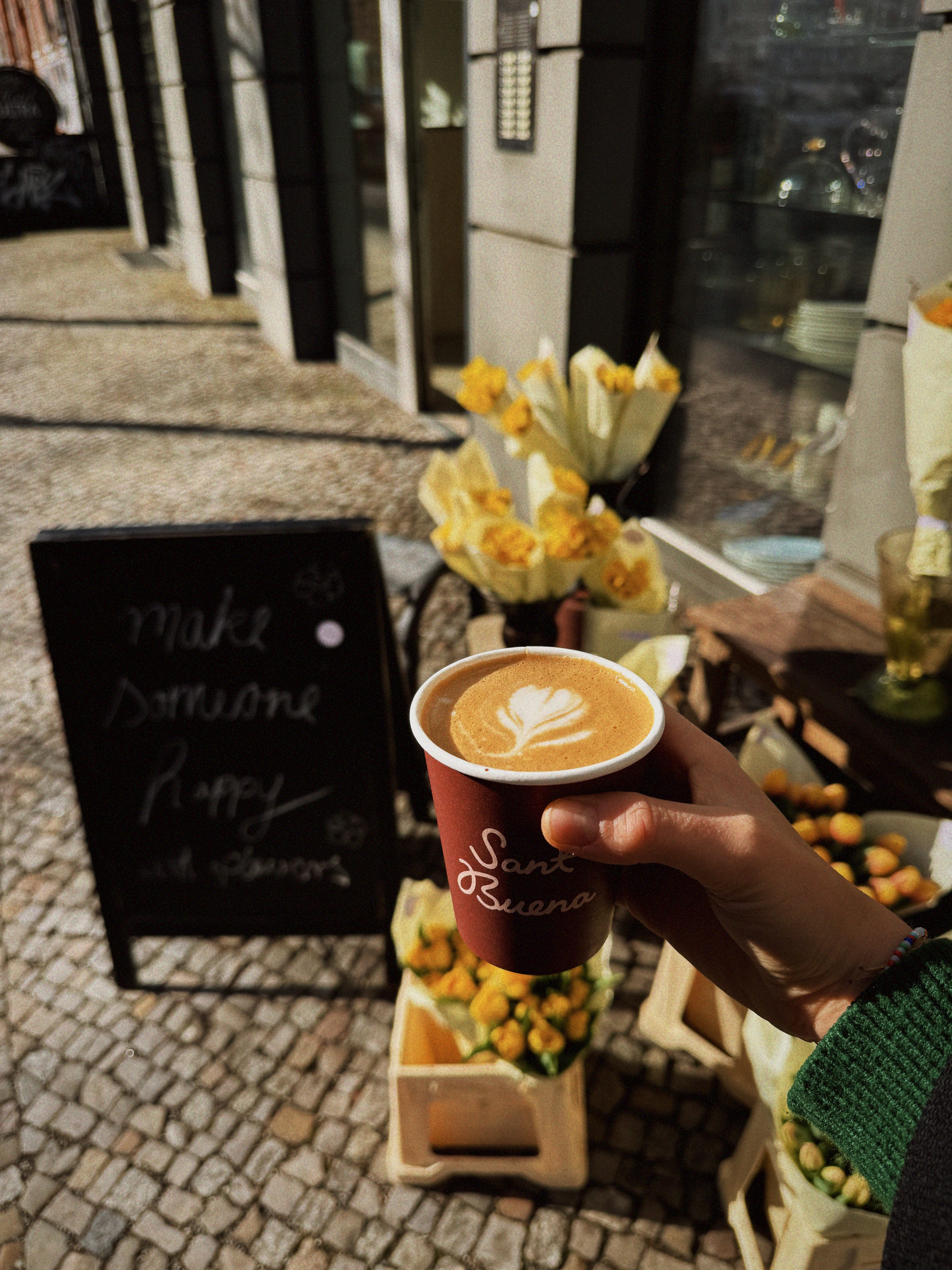
I hope you all had a good week. I’m not sure if this will last, but it feels like we might have made it through Berlin winter - 16 degrees and sun the last few days!
That, plus the most wholesome weekend, distracted me from being sick for what feels like the 100th time this year. 🤪
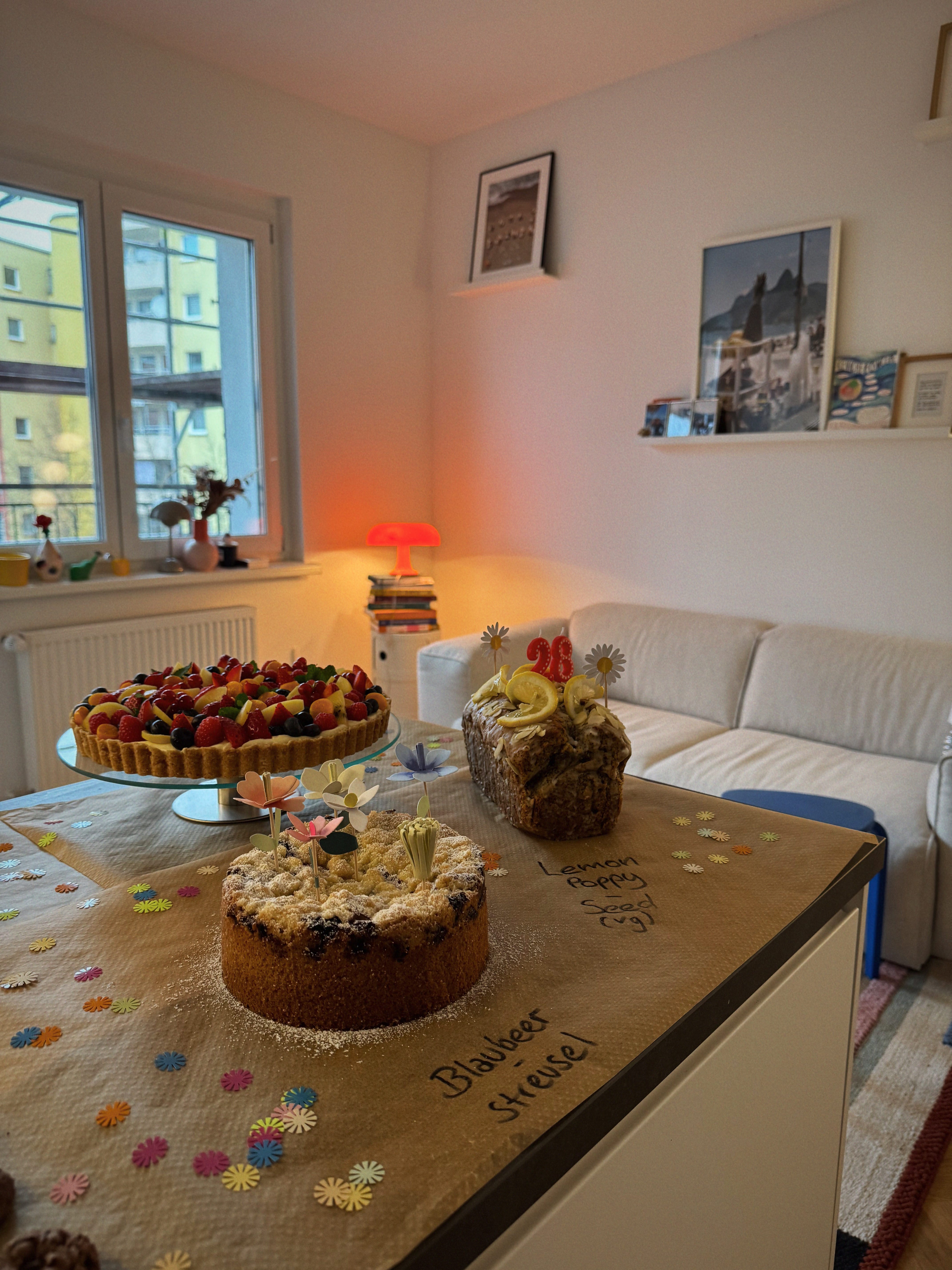
Last Saturday, I basically turned my apartment into a café and invited my closest friends to celebrate my birthday. One of my best friends came from Cologne and we spent the whole morning baking and preparing everything. Always worth it!
My name is Constanze, and my worst date…
In the evening, two friends had rented a private room in a restaurant and invited two groups of girls who didn’t really know each other yet - but probably should. And it was honestly so much fun. Instead of the usual slightly awkward “name, job, and why you matter” intro round, the only rule was: say your name and tell the story of your worst date.
For the first time ever, I didn’t overthink introducing myself. I immediately raised my hand because I actually had several stories to choose from.
We were either crying from laughter or completely speechless, not much in between. The waiter looked more confused every time he walked in. Fascinating how much faster you connect over slightly embarrassing stories than over jobs 😉
Future gives me anxiety
Last week I also started producing reels for our book club. We have very engaged community - but barely post anything. So I volunteered to climb cringe mountain and become someone who talks into a camera (at least it’s about books.)
February was clearly a reading month, I finished seven books! And one of them I really have to recommend - not only because it was genuinely fun to read, but because the author is one of the most inspiring women I know and her books actually make me less anxious about the future.
Florence Gaub is, for me, the definition of kicks ass. She’s Director of the Research Division at the NATO Defense College in Rome. She also serves on the World Economic Forum’s Global Future Council on Complex Risks, is a member of the World Science Fiction Society (and mostly posts surfer photos on Instagram).
In short: she’s a professional when it comes to thinking about the future.
Which is perfect for someone like me. I’m the kind of person who is three hours early at the airport. I don’t do well with situationships. Uncertainty doesn’t energize me. It has gotten slightly better over the years. I can tolerate more ambiguity than I used to. But I still sometimes wonder how I survived three years in Brazil.
Future is a Construct
In her first book „Future“, Florence explains: the future doesn’t actually “exist” somewhere ahead of us. It’s something we construct in the present.
Our brain takes memories from the past, filters them through our current emotions, adds imagination, and then produces a version of what might come next. Neuroscience even shows that imagining the future activates similar brain areas as remembering the past. So the future feels real because we mentally rehearse it - and what we rehearse influences how we act. (Which also means: if you lie awake imagining worst-case scenarios, you’re not just worrying. You’re practicing them 🤪)
How I got detained in Moscow
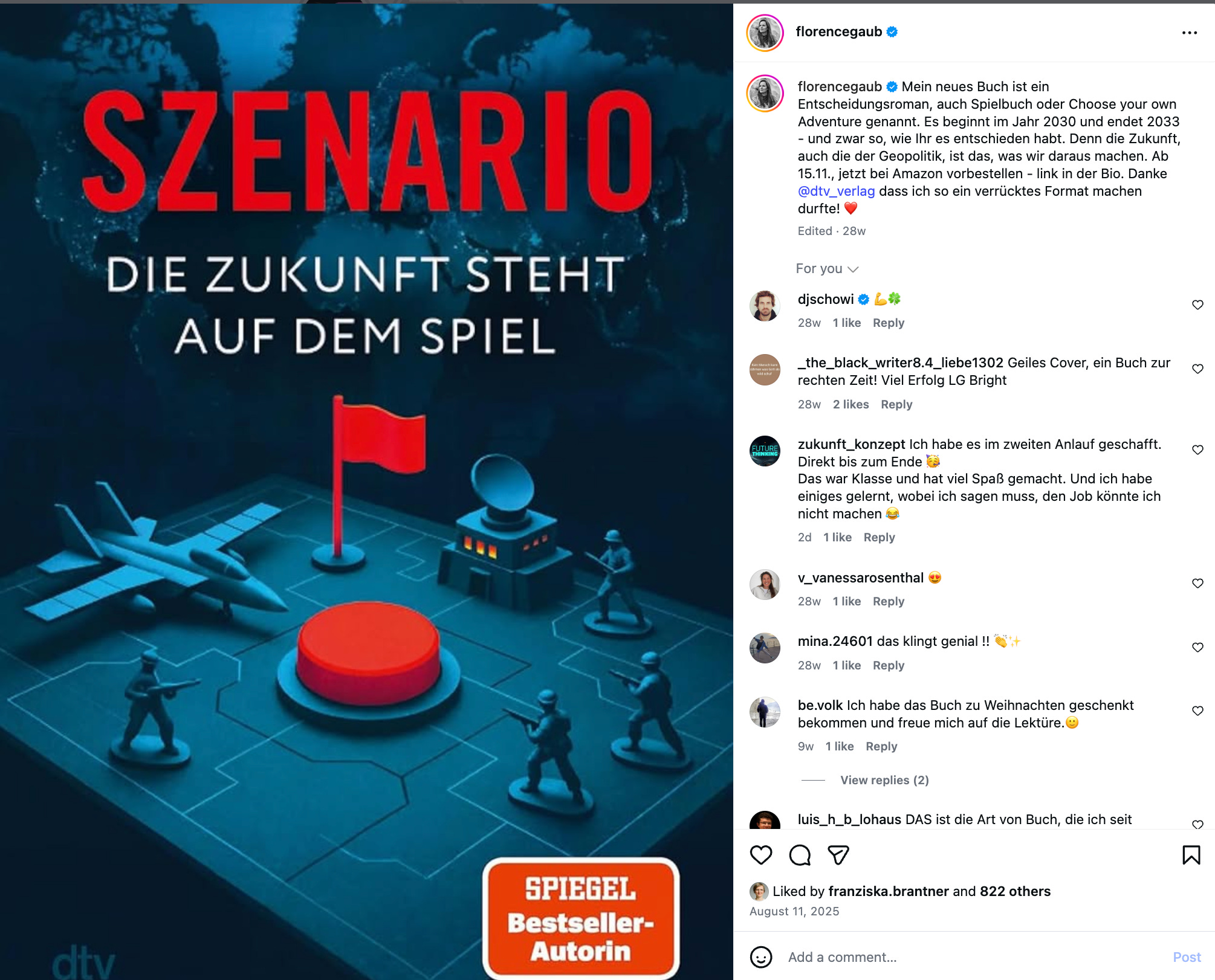
In „Scenario“, she turns this idea into something even more fun fun. The book works like those “choose your own adventure” stories - just with geopolitics. It starts with a call from Norway about an incident near Spitsbergen, close to Russia, and from there everything depends on your decisions.
In one version, I ended up detained in Moscow as a spy. In another, I somehow reformed NATO. Same starting point, completely different outcomes.
Her core idea is simple: good strategy isn’t about knowing the future. It’s about not being surprised by it.
What I find most helpful is how she challenges our tendency to think in single futures. We often say things like “Europe will decline” or „AI will take all of our jobs“ and reduce everything to one likely storyline. But the future is plural. There are always multiple possible paths, shaped by decisions and trade-offs. The real shift is moving from “What will happen?” to “What could happen?”
What if?
And that becomes very practical when you think about your own life:
Maybe I stay in Berlin and build something long-term here.
Maybe I move to Munich close to my fam. Maybe I go back to Brazil.
Maybe I have two kids. Maybe I don’t. Maybe I have three.
Maybe I stay I go into politics. Maybe I go work in startups.
Maybe I open a book shop. Maybe AI makes my job irrelevant.
Maybe it creates something I can’t even imagine yet.
Same starting point, very different trajectories.
If I tell myself there’s only one likely outcome - and it’s the stressful one - my courage shrinks. If I allow for multiple paths and accept that I influence at least some of the variables, I feel more agency.
Maybe that’s the real value of thinking about the future this way: Not certainty, just more options.
And if you want to have a really nerdy - geopolitical further read on that: Florence was also involved in a project called “What If? Ten Dragon King Scenarios for 2030” at the NATO Defense College.
Some of the scenarios include questions like:
What if rumours about a new bioweapon triggered panic?
What if a nuclear weapon detonated in space?
What if Ukraine decided to go nuclear?
What if Egypt and Ethiopia went to war over water?
What if Russia and Georgia suddenly patched things up?
None of these are predictions. It’s basically a structured exercise in thinking through extreme but plausible geopolitical futures - not to predict them, but to train your imagination to handle complexity.
🌞🌞🌞
Anyway - go outside, get some vitamin D, and enjoy the sun while it lasts.
Have a great weekend & see you on the other side!
— Consti