🚫 I’m Done Improving Myself.
Notes from the mindset aisle.

Happy Friday, everybody!
I hope you all made it through the week without breaking anything, given that Berlin has recently turned into what feels like the world’s largest ice rink. We’ve almost made it through January now, which somehow felt endless - and New Year’s Eve already seems like it happened ages ago…⛸️
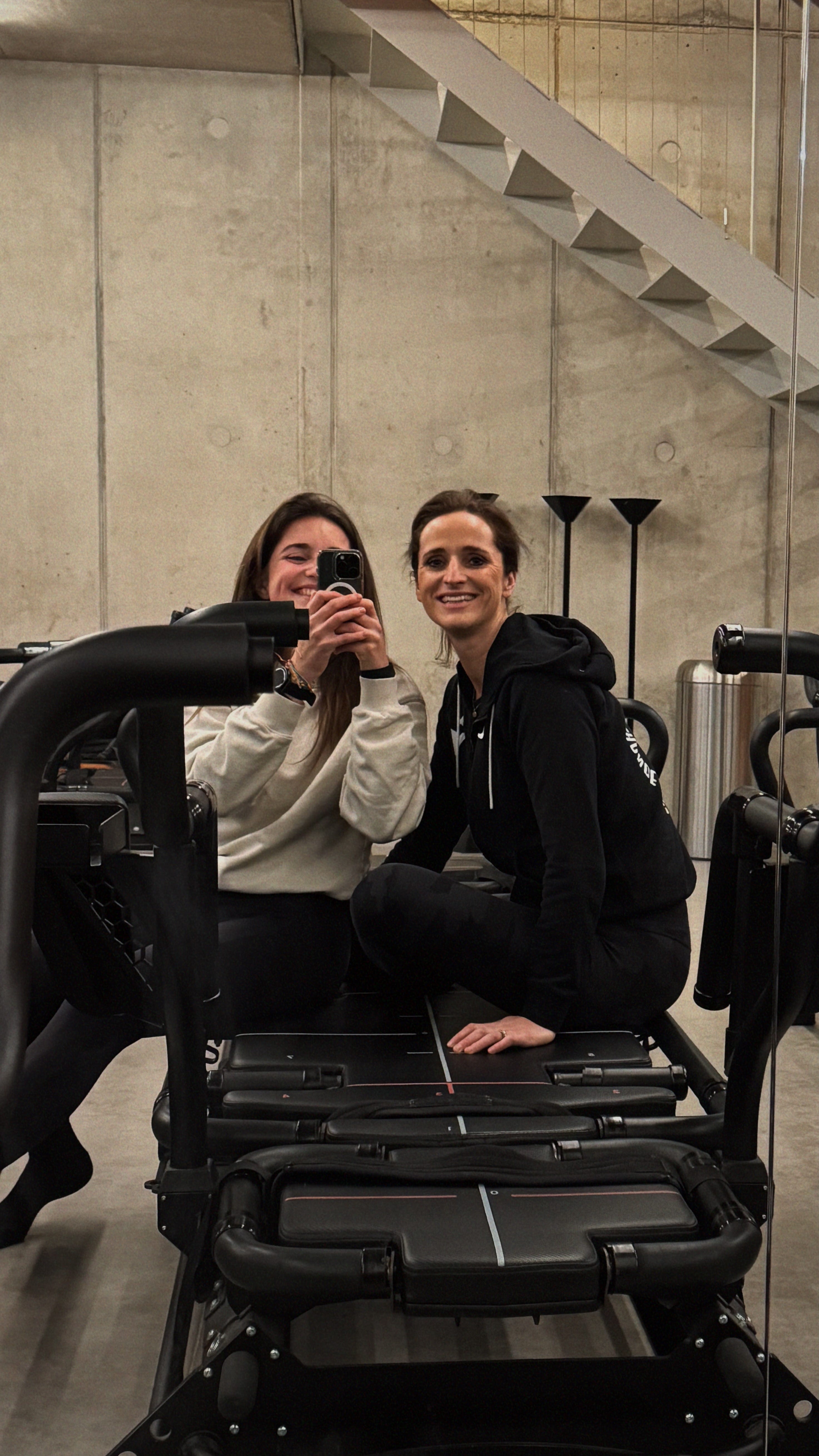
I actually had a really, really good week. 🥳 My boss is back from her offline time, which means I’m once again under active adult supervision - but it also means that life is moving faster again, which feels good! We kicked things off by going to Reformer Pilates together: fun, but also very humbling. As most people know, I love running, and I really have to force myself to go to the gym or do any kind of sport where I’m not just sweating excessively or getting shouted at by good looking people.
We also had our strategy session for the year, which resulted in many fun plans coming up. Sometimes I wonder if this job will ever stop being exciting and encouraging.
Yesterday, I had my last public speaking session. A few months ago, I already wrote on here about how awkward and humbling these sessions felt to me. That has changed quite a bit over time. I feel much more confident now, much clearer about what matters when I speak, and less distracted by myself while doing it. I can genuinely recommend doing something like this - especially if you still have some learning budget left and are wondering what to do with it. The only thing missing now is actually getting invited to speak somewhere. 😉
The highlight of the week, though, was much simpler. I picked up my friend Louisa from her office today so we could walk home together and catch up on recent life events. When she walked out of the building, we immediately burst out laughing because we were dressed completely identically: the exact same jacket, the exact same backpack. We looked like twins who had coordinated without meaning to, and walking through Berlin like that felt hilarious. 😂
My Date Go-To Spot
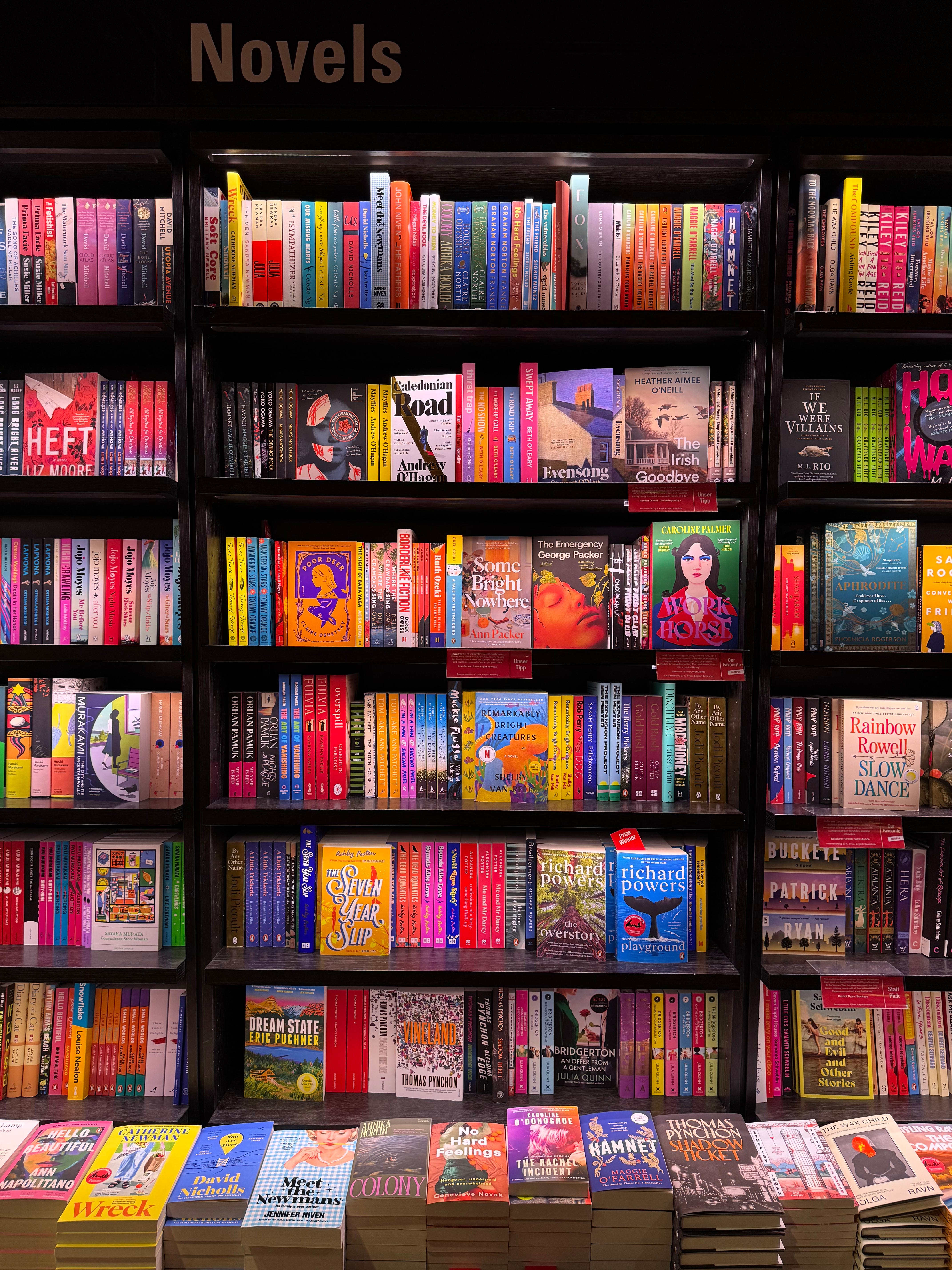
I also spent quite a bit of time reading again this week. I finished three books and, for work (obviously), ended up in several bookstores. One of my favourites in Berlin is Dussmann - probably also the biggest one. It’s open late and has a great English section.
Every time I’m there, I think about a date I once had in that exact bookstore more than two years ago, and thinking about it always makes me smile a little. I know the guy is also reading this newsletter. The fact that he’s subscribed here feels like proof enough that I made a lasting impression.🤪
At the time, I thought it was a great idea for a date. I love books, I love talking about them, and walking through different shelves and topics feels like an easy way to get to know someone. What I hadn’t fully anticipated was that he would immediately head straight for the self-help and mindset section. He picked up a habits book and started explaining to me how he tracks his mornings in 30-second increments to optimise his productivity, measure his time, and get the most out of his day.
I’m not a particularly structured person, and I realised very quickly that I could not deal with that level of optimisation. For his very functional founder life, it probably made perfect sense. For me, it mostly confirmed that I don’t really like mindset books at all - which is why I tend to look at them with a bit of sarcasm. 🙃
What self-help books tell us about ourselves
That also resonates with an article in The Economist I recently read about what self-help books actually tell us about ourselves. Not whether they work or don’t work, but what their popularity reveals about the time we live in.
If you look at self-help books historically, they almost read like a timeline of collective insecurity:
In the 19th century, Samuel Smiles’ “Self-Help” told readers that discipline, attention, and willpower were enough to succeed - a comforting idea in a rigid, hierarchical society.
In the 1930s, “Think and Grow Rich” promised that visualising success could pull people through economic despair.
The genre holds up a mirror to society
The most popular titles now are “Atomic Habits”, “The 7 Habits of Highly Effective People”, “9 Things Successful People Do Differently”, you name it - all together books about morning routines, optimisation, and marginal gains (perfectly written for the date guy). The promise has become smaller and more technical: change your life in tiny steps, manage your time better, improve yourself without disrupting too much. The underlying assumption seems to be that we’re all exhausted, overstimulated, and quietly hoping there’s still a system we haven’t quite cracked.
Seen this way, the mindset section in bookstores suddenly makes a lot of sense. These books don’t just offer advice - they mirror who we are right now: time-poor, productivity-focused, constantly measuring ourselves, and slightly worried that we’re doing life inefficiently.
Mindset is the biggest red flag
This is where my resistance starts. Not because I’m against learning or improving, but because I’ve started to dislike what reading is expected to do now. Books are no longer just books; they’re tools. They’re supposed to optimise you, regulate you, fix you. Somewhere along the way, the word “mindset” entered the conversation - and at this point I mostly hear it as a warning signal. 🙃
Whenever someone enthusiastically recommends a “mindset book,” I have to actively restrain myself from asking follow-up questions I don’t actually want the answers to.
I don’t read to improve myself in the self-help sense. I read because I want better arguments, clearer thinking, and occasionally the pleasure of following a thought that doesn’t end in a checklist. I read to relax, to disappear into something that doesn’t immediately ask me to optimise my habits or reframe my personality. I want books to make me sharper and more curious, not smaller.
The article makes the same point: there’s little evidence that self-help books significantly improve people’s lives. What does seem to help is turning attention outward towards ideas, stories, other people, the world. Which, inconveniently, is also what good books have always done. :)
You Don’t Need To Be Fixed
I genuinely believe that not every book needs to make you better. Some just need to make you think, stay with a question a little longer than usual, or remind you that not everything needs a clear takeaway. That said, I’m always open to being convinced otherwise - so if there’s a self-improvement book that truly changed your life (for the better), I’m happy to hear about it. 🤷♀️
As I’m sending this, I’m already on my way home to spend some quality time with my parents in beautiful and hopefully snowy Bavaria. Hope you have a good weekend as well ❤️
See you on the other side,
Constanze
Really appreciate how this frames self-help books as cultural artifacts rather than neutral tools. The shift from Smiles' "discipline gets you through rigid hierarchy" to today's "optimize your mornings in 30-second increments" does say alot about how scattered modern life feels. I remember falling into the habit tracker trap once and ended up more anxious about logging stuff than actually living through it.
Hey Constanze! Did you read The Let-them Theory from Mel Robbins? I would also call it a sort of mindset book, but it‘s less about improving yourself and more about learning how to let go, i.e. let others be themselves - cause you can‘t change them 😋. On another note: Would you like to share where you did your public speaking coaching? Thanks! ☺️